HOW LEGACY SYSTEM MODERNIZATION IMPROVES SCALABILITY & REDUCES IT COSTS
Introduction
In today's digital-first economy, outdated IT infrastructure is no longer just an operational inconvenience - it is a strategic liability. Organizations relying on legacy systems face compounding maintenance costs, performance bottlenecks, and an inability to scale with market demands. Legacy system modernization has become one of the most critical investments an IT team can make.
This blog breaks down how modernizing legacy systems improves scalability, reduces long-term IT costs, and delivers measurable business value. Whether you are just starting to evaluate modernization options or already planning your migration roadmap, this guide offers clear, actionable insights.
What Are Legacy Systems and Why Do They Become a Problem?
A legacy system is any software application, platform, or IT infrastructure that is outdated, unsupported, or incompatible with modern technologies. These systems were often built decades ago and were state-of-the-art in their time - but today, they struggle to integrate with APIs, cloud services, and modern security frameworks.
Common characteristics of legacy systems:
IDC research indicates that unplanned legacy system downtime can cost enterprises between $1 million to $5 million per hour in lost productivity and missed revenue. The longer modernization is delayed, the greater the accumulated technical debt.

How Legacy System Modernization Improves Scalability
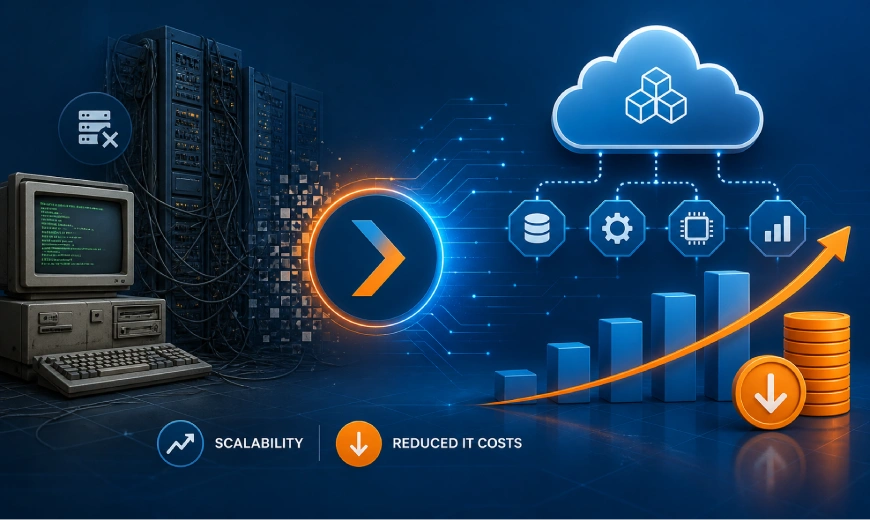
Scalability is the ability of your IT infrastructure to handle increased workloads efficiently without compromising performance. Legacy systems are inherently rigid - designed for fixed capacities that cannot flex with business demand.
Modernization fundamentally changes this by introducing scalable architectures and cloud-native design patterns.
Transition from Monolithic to Microservices Architecture
One of the most impactful shifts in legacy application modernization is moving from monolithic systems to microservices. In a monolithic architecture, every component is tightly bundled, meaning a single failure can bring down the entire system.
Microservices decompose applications into small, independently deployable units. Each service can be scaled individually based on real-time demand, significantly improving resource efficiency and system resilience.
Cloud Migration Enables Elastic Scalability
Migrating workloads to cloud platforms such as AWS, Microsoft Azure, or Google Cloud introduces elastic scalability - the ability to automatically scale resources up or down based on traffic and usage patterns.
Cloud-native infrastructure eliminates the need to over-provision on-premise hardware. Instead, IT teams pay only for what they consume, enabling granular cost control alongside scalable performance.
API-First Design Supports Integration at Scale
Modern systems built on RESTful APIs or GraphQL enable seamless integration with third-party services, SaaS platforms, and internal tools. This reduces duplication of effort, eliminates data silos, and allows IT infrastructure to scale horizontally by adding new services without refactoring the core system.
Containerization with Docker and Kubernetes
Container orchestration tools like Kubernetes enable IT teams to deploy, manage, and scale applications with precision. Containers package all application dependencies, ensuring consistent performance across environments - a critical requirement for scalable IT infrastructure.
How Legacy System Modernization Reduces IT Costs
The financial case for legacy system modernization is compelling. While the upfront investment in planning and execution can be significant, the long-term cost reductions across maintenance, operations, and staffing far outweigh the initial outlay.
Elimination of Technical Debt
Technical debt refers to the accumulated cost of shortcuts and outdated code that slows development velocity and increases the risk of system failures. Every year a legacy system remains in production, technical debt grows - increasing maintenance complexity and the cost per change. Modernization removes this debt, enabling development teams to deliver features faster with fewer bugs and less regression testing.
Reduction in Infrastructure and Licensing Costs
Legacy systems typically rely on expensive proprietary hardware, outdated database licenses, and specialized vendor contracts that cost far more than modern alternatives. Cloud-based platforms and open-source ecosystems provide comparable or superior functionality at a fraction of the total cost of ownership.
Lower Operational Overhead
Modern platforms automate many routine IT tasks - from system monitoring and patch management to automated backups and disaster recovery. This significantly reduces the manual effort required from IT staff, reallocating skilled resources from maintenance firefighting to strategic initiatives.
Reduced Downtime and Incident Costs
Legacy systems are prone to outages, performance degradation, and security incidents due to lack of vendor support. Every incident translates to lost productivity, customer dissatisfaction, and remediation costs. Modernized systems with built-in redundancy, auto-failover, and proactive monitoring dramatically reduce both the frequency and impact of downtime.
Talent Acquisition and Retention Savings
Finding developers skilled in COBOL or legacy frameworks is increasingly difficult and expensive. Modern technology stacks attract a wider talent pool, reducing hiring friction and lowering compensation premiums for specialized legacy skill sets.
Legacy vs. Modern System: Cost & Performance Comparison
| Dimension | Legacy System | Modernized System |
|---|---|---|
| Maintenance Cost | Up to 80% of IT budget | 30-40% of IT budget (avg.) |
| Scalability | Fixed capacity, manual scaling | Elastic, auto-scaling on demand |
| Downtime Risk | High - vendor unsupported | Low - redundant, monitored |
| Integration | Limited, costly custom builds | Native APIs, cloud-ready |
| Security | Outdated protocols, high risk | Modern standards, compliance-ready |
| Time-to-Market | Weeks to months per feature | Days with CI/CD pipelines |
| Talent Pool | Scarce, expensive specialists | Wide availability, lower cost |
A Practical Legacy System Modernization Framework
Successful IT modernization requires a structured, phased approach. Attempting a 'big bang' replacement is high risk and often leads to project failure. A measured, incremental strategy delivers early wins while managing complexity.
Assessment and Discovery
The foundation of any successful modernization effort begins with comprehensive assessment.
- Conduct a full audit of existing systems, dependencies, and technical debt
- Map business processes to system components to understand impact and criticality
- Evaluate modernization pathways - rehost, refactor, re-platform, replace, or retire
- Establish baseline KPIs for cost, performance, and availability
Strategy and Roadmap Development
A clear strategy transforms assessment findings into an actionable modernization blueprint.
- Prioritize systems based on business criticality and modernization complexity
- Select target architecture - cloud-native, hybrid, or microservices-based
- Define technology stack, vendor partnerships, and migration tooling
- Build a phased roadmap with clear milestones, timelines, and resource allocation
Incremental Migration and Modernization
Execution follows an incremental path, minimizing risk while delivering continuous value.
- Begin with lower-risk, high-impact systems to demonstrate early ROI
- Apply the strangler fig pattern - gradually replace legacy components while keeping the system live
- Implement CI/CD pipelines for automated testing and deployment
- Ensure data migration integrity with validation checkpoints
Optimization and Continuous Improvement
Post-migration, the focus shifts to optimization and long-term operational excellence.
- Monitor performance, costs, and security posture post-migration
- Leverage observability tools like Datadog, Prometheus, or AWS CloudWatch
- Iteratively optimize cloud resource consumption to reduce costs
- Upskill IT teams on modern development practices and cloud operations
The Strangler Fig Pattern is one of the safest approaches to legacy modernization. It allows teams to incrementally replace legacy components with modern services without taking the entire system offline - minimizing business disruption while delivering continuous value throughout the migration journey.
Key Business Benefits of Legacy System Modernization
Operational Benefits
- Faster deployment cycles
- Improved system reliability
- Enhanced security posture
- Seamless third-party integration
- Greater developer productivity
Financial Benefits
- Up to 50% reduction in maintenance spend
- Elimination of hardware CAPEX
- Pay-as-you-go cloud economics
- Lower talent acquisition costs
- Improved compliance - fewer audit penalties
Frequently Asked Questions
Legacy system modernization focuses specifically on updating or replacing outdated IT infrastructure to improve performance, scalability, and cost efficiency. Digital transformation is broader - it encompasses the cultural, process, and technology changes that fundamentally shift how an organization operates and delivers value. Modernization is often a foundational step within a digital transformation strategy.
The timeline varies significantly based on the complexity, size, and criticality of the systems involved. Small-scale modernization projects may take 3-6 months, while enterprise-wide transformations can span 2-5 years. A phased, incremental approach helps deliver early wins and value while managing risk across a longer horizon.
Key risks include data migration failures, business disruption during transition, budget overruns, and scope creep. These risks are best mitigated through thorough upfront discovery, phased migration planning, rigorous testing protocols, and stakeholder alignment on objectives and timelines.
Not necessarily. While cloud migration offers compelling scalability and cost benefits for many workloads, some systems - particularly those with strict data sovereignty requirements, real-time processing needs, or specific regulatory constraints - may be better suited for hybrid or on-premise modernization approaches. A thorough assessment helps identify the most suitable strategy per workload.
ROI can be measured through several KPIs: reduction in maintenance and infrastructure costs, improvement in system uptime and availability, faster time-to-market for new features, reduction in security incidents, and improved developer productivity. Establishing clear baselines before modernization begins is essential for accurate post-migration ROI measurement.
Technical debt is the cumulative cost of deferred maintenance, workarounds, and outdated code that slows development and increases system risk. High technical debt signals that a system has outgrown its original design. Modernization addresses technical debt at its root, enabling IT teams to innovate faster with fewer constraints.
Conclusion: Modernization Is Not Optional — It Is Imperative
Legacy system modernization is not simply an IT upgrade project. It is a business transformation initiative with measurable impact on scalability, cost efficiency, security, and competitive agility.
For IT professionals, understanding the strategic value of modernization - and communicating that value to business stakeholders - is increasingly a core competency. The question is no longer whether to modernize, but how to modernize intelligently, incrementally, and with a clear return on investment.
By adopting a structured modernization framework, leveraging cloud-native architectures, and addressing technical debt systematically, organizations can build the scalable, cost-efficient IT infrastructure needed to thrive in the modern digital economy.